
LinkedIn has officially surpassed 1.3 billion members in 2026, solidifying its status as the “Operating System” for global B2B commerce. But with that many feed updates being viewed every minute, the platform has reached a tipping point: buyers now have an evolved “spam filter” for generic messages.
In 2026, the “growth hacking” playbook of 2025 is dead. Success now belongs to those who use Agentic AI and intent signals to build “Zero-Click” value—providing proof of expertise before a prospect even opens your message. If you aren’t blending smart automation with deep, human-led personalization, you’re not just losing leads; you’re becoming invisible.
In this guide, we’ll break down how to automate LinkedIn outreach safely, effectively, and profitably in this new “Trust-First” era.
1. What is LinkedIn Outreach in 2026?
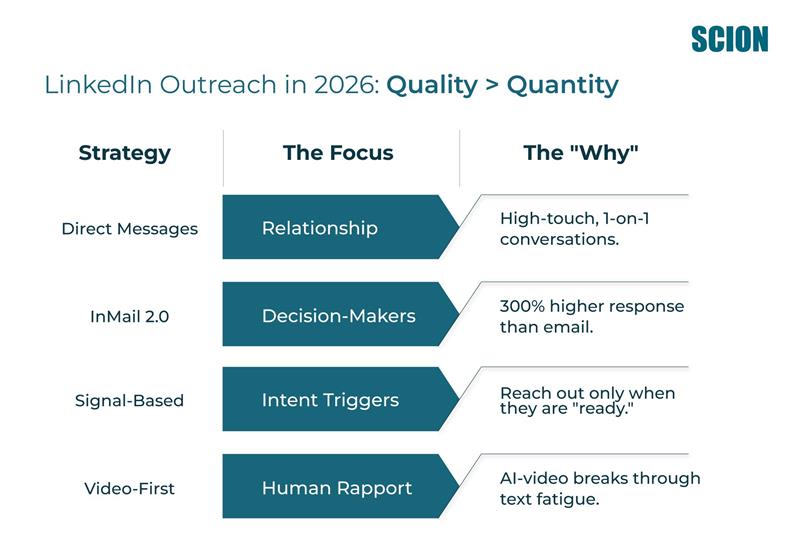
Outreach in 2026 is a multi-touch ecosystem that prioritizes authority over volume. It includes:
- Direct Message (DM) Outreach: Highly tailored conversations with 1st-degree connections.
- InMail Outreach: Reaching decision-makers directly, now seeing 300% higher response rates than traditional email.
- Signal-Based Outreach: Reaching out only when a “buying intent” trigger occurs (e.g., a prospect changes jobs, their company secures funding, or they interact with your high-value PDF carousel).
- Video-First Outreach: Using AI-assisted video introductions to build instant rapport in a world saturated with text
The Reality Check: LinkedIn now rewards “Knowledge-Rich” signals. generic, bot-written templates are actively suppressed by the algorithm.
LinkedIn Personal Branding: The Invisible Hand of Outreach
Your personal brand acts as the pre-selection filter for every outreach effort you initiate. Because 81% of B2B buyers now audit a sender’s profile before replying, outreach is no longer a “cold” interaction; it is the final step in a trust-building funnel. Building a robust personal brand on LinkedIn—anchored by a value-driven headline, a “Featured” section that mirrors your outreach claims, and a consistent history of insightful commenting—transforms you from a “random solicitor” into a recognized authority. When your name appears in an inbox, a strong brand ensures the recipient thinks, “I’ve seen their insights before,” effectively shortening the sales cycle and boosting connection acceptance rates by up to 45% compared to anonymous profiles.
LinkedIn SSI Score: Your Algorithm “Credit Score”
The Social Selling Index (SSI) is the primary metric LinkedIn uses to determine your profile’s organic reach and credibility. It’s a 0–100 score that acts like a credit rating for your professional authority; a high score (75+) signals to the algorithm that you are a trusted contributor, often resulting in 45% more sales opportunities and higher search visibility.
The 10-Minute Daily “75+ SSI” Routine
To reach the top 1% of your industry in 2026, you don’t need hours; you need consistent, high-signal activity. Use this “Coffee Cup” routine to systematically hit all four SSI pillars.
Phase 1: The “Insight” Sprint (4 Minutes)
- Pillar: Engage with Insights
- Action: Find 3 posts from key decision-makers or industry peers. Leave a “Value-Add” comment of at least 15 words.
- Why: In 2026, the algorithm ignores “Great post!” comments. Substantial replies increase your profile visibility by 40% and boost your engagement pillar.
Phase 2: The “Authority” Pulse (3 Minutes)
- Action: Share a quick tip, a “lesson learned” from your week, or a short video.
- Why: Consistency is the algorithm’s favorite signal. Regular posting tells LinkedIn you are a primary source of information, keeping your brand score high.
Phase 3: The “Curated Growth” Sprint (3 Minutes)
- Pillar: Find the Right People & Build Relationships
- Action: Send 2-3 personalized connection requests to people in your target niche. Reference a specific insight from their profile.
- Why: A high acceptance rate is critical. Blindly adding people lowers your score; personalized requests that get “Accepted” tell LinkedIn your network is high-quality.

Ready to Turn LinkedIn Into a Growth Engine for Your BNI Market?
Stay visible, professional, and consistent with a done-for-you LinkedIn solution built specifically for BNI Leaders.

2. Why Automate LinkedIn Outreach? (The 2026 View)
Manual outreach is no longer scalable for a modern business, especially with LinkedIn’s focus on “Deep Sales.”
- Beat “Message Fatigue”: Automation ensures you follow up at the perfect time—statistically, Thursdays see the highest reply rates—without you having to track it manually.
- The Multichannel Multiplier: 2026 is the year of the “Hybrid Touch.” Tools now sync your LinkedIn activity with Email and even WhatsApp to create 2-4x more conversions than single-channel efforts.
- Efficiency & Safety: Instead of manual clicking, you use “Listening Agents” to scan for keywords and “Engagement Agents” to draft personalized replies for your final human approval.
LinkedIn Plugins: Your Outreach Superpowers
The most effective personal brands rely on a “smart” tech stack that balances automated efficiency with high-quality data.
- Dux-Soup ($15–$99/mo) serves as your engagement engine, automating repetitive tasks like profile visits and personalized connection requests to keep your visibility high.
- To turn that visibility into direct access, Apollo.io ($49–$149/mo) and Kaspr ($49–$102/mo) act as powerful overlays, instantly surfacing verified emails and phone numbers directly on a prospect’s profile—with Kaspr specifically favored for its ease of use and fresh European data.
- For those focused on high-deliverability email campaigns, Skrapp ($49–$349/mo) provides specialized B2B email verification to ensure your lists remain clean, while Wiza ($49–$399/mo) bridges the gap for Sales Navigator users by exporting entire search results into ready-to-use lead sheets.
These plugins allow you to trade manual “guessing” for data-backed precision, giving your personal brand the leverage to scale while you focus on the high-level human conversations that close deals.
3. How to Automate with LinkedIn Sales Navigator
Sales Navigator in 2026 is no longer just a database; it’s an Intent Signal Engine that acts as your strategic engine for “Deep Sales.” It has evolved beyond a simple search tool into an AI-powered signal engine that alerts you to “buying triggers”—such as when a high-value prospect changes jobs, a target company secures funding, or a decision-maker interacts with your content. You can leverage advanced filters like “Spotlight” to find active users and “Relationship Explorer” to map out internal buying committees, you can bypass the noise of the general feed and focus entirely on high-intent leads. This environment is where your personal brand meets precision targeting, allowing you to use InMail and “Smart Links” to track exactly how prospects engage with your shared decks or videos in real-time.
Here’s a more detailed guide on how to use LinkedIn Sales Navigator
> Using Advanced Filters & Intent Signals
Stop targeting by job title alone. Filter for high-conversion triggers:
- Technographic Churn: See when a target company drops a competitor’s software.
- Lived Experience: Target users who have posted about a specific industry pain point in the last 30 days.
- TeamLink: Leverage your colleagues’ connections to turn a cold lead into a warm introduction.
> Safe Automation Workflows
To protect your account in 2026, adhere to these Safety Thresholds:
- Connection Requests: 100–150 per week (quality > quantity).
- Response Rates: Aim for a 30-50% reply rate. If your rate drops below 10%, LinkedIn may flag your automation as “low value.”
- Human Mimicry: Use tools with “Dwell Time” logic—simulating the time a real person spends reading a profile before clicking “Connect.”
4. Creating Your 2026 Outreach Funnel
The funnel has shifted from “selling” to “proving.”
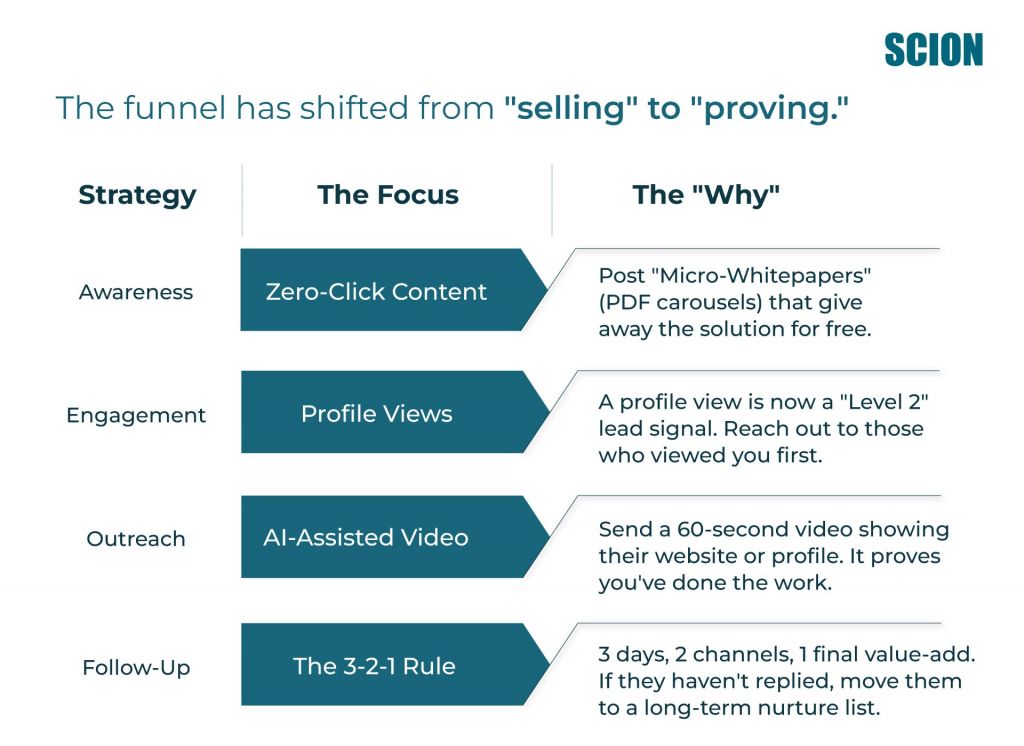
This workflow is your roadmap for turning silent lurkers into signed clients by working with the 2026 algorithm, not against it. Instead of hoping for a bite, you’re using Zero-Click Content to prove your value upfront and treating every Profile View as a green light to start a conversation. You swap generic text for AI-Assisted Video and sticking to the 3-2-1 Rule to ensure your outreach feels like a tailored white-glove service rather than just another automated blast.
5. The 2026 LinkedIn Automation Tool Stack
The “Chrome Extension” era is over due to security risks. Cloud-based, IP-protected tools are the only safe way to go.
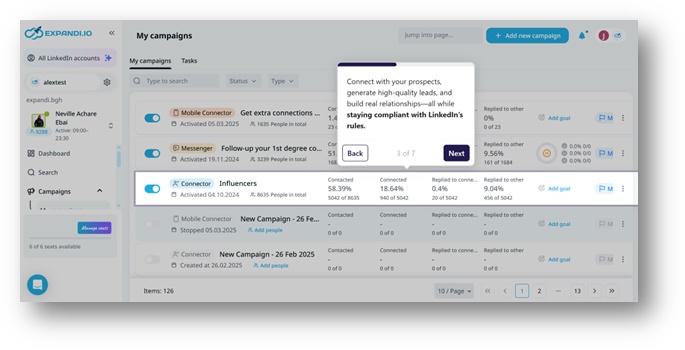
1. Expandi: Remains the industry leader for safe, cloud-based multi-account management.
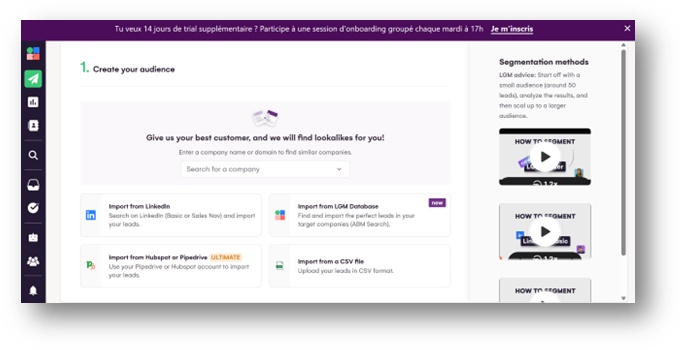
2. LaGrowthMachine: The premier choice for multichannel B2B outreach, integrating LinkedIn, email, and CRM data flawlessly.
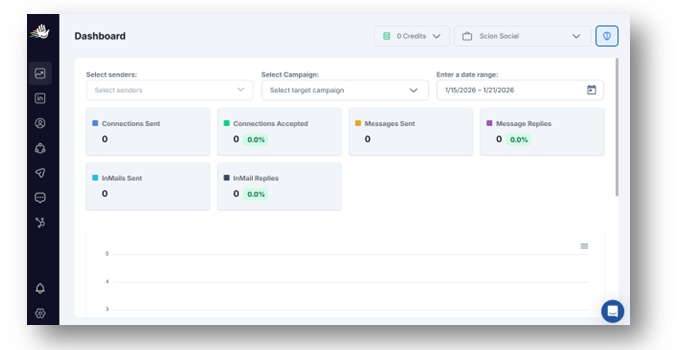
3. HeyReach: Specifically built for agencies to scale outreach across dozens of “Sender” profiles safely.
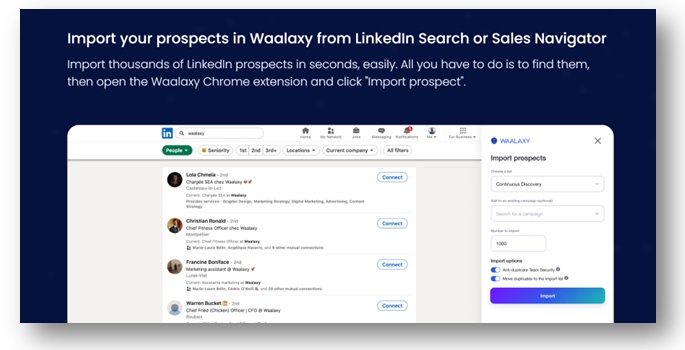
4. Waalaxy: Still the most user-friendly option for small business owners looking for “set it and forget it” workflows.
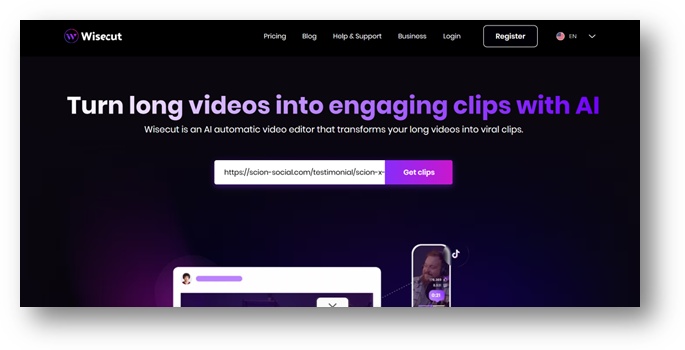
5. Wisecut: Essential for video personalization. It automatically edits out silences and adds captions to your outreach videos.
How to Write Effective Messages (2026 Templates)
In 2026, conversational tone beats industry jargon every time.
The “Intent Signal” Hook:
“Hi [Name], I noticed [Company] just started hiring for [Role]—congrats on the growth! Usually, that means [Specific Pain Point] becomes a priority. I just finished a case study on how we solved that for [Competitor]. Worth a look?”
The “Zero-Click” Follow-up:
“Hi [Name], no pressure to reply, but I saw your post on [Topic] and thought of this framework we use to [Achieve Result]. Here’s the link (no gated form). Hope it helps your team this week!”
Conclusion: The Trust Engine
In 2026, LinkedIn is no longer a social network—it’s a trust engine. By automating your LinkedIn outreach using signals and authority, you aren’t just “prospecting”; you are positioning yourself as a “safe bet” in a crowded market.
Is your LinkedIn profile ready for 2026? Let’s connect for a 1:1 strategy session.
FAQ’s
Yes, but only with cloud-based tools that use residential IPs and respect the platform’s weekly connection limits. “Mass automation” is dead; “Signal-based automation” is the standard.
To stay safe in 2026, keep it to 20–25 per day. LinkedIn’s algorithm now weighs the quality of your connections and your acceptance rate more than the total number sent.
It penalizes “lazy” automation. If you send the same message to 100 people and get 0 replies, your reach will be throttled. If your messages are personalized and get high engagement, the algorithm actually supports your visibility.