
Last Updated: May 26, 2026
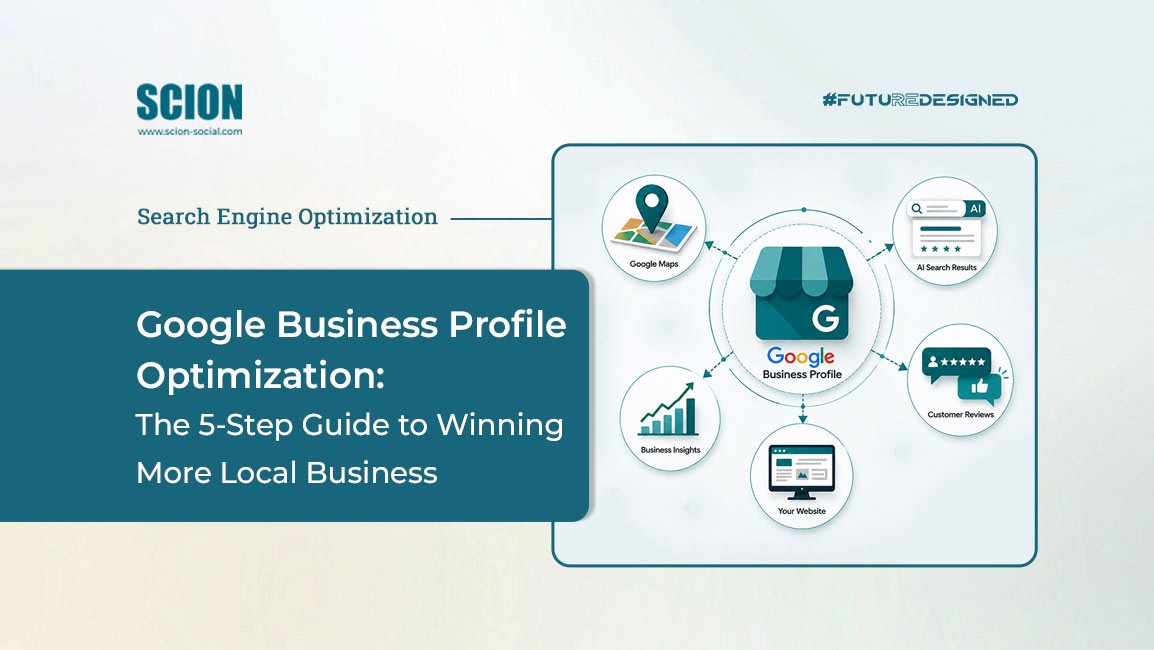
In 2026, the local search landscape has moved beyond simple “search and click.” With the rise of AI Overviews and ultra-localized “near me” algorithms, your Google Business Profile (GBP) is no longer just a digital business card—it is the foundational data layer that determines if your business exists in the eyes of Google’s AI.
This Google Business Profile optimization guide provides a high-level roadmap for decision-makers and marketing teams to dominate the local pack and capture high-intent leads.
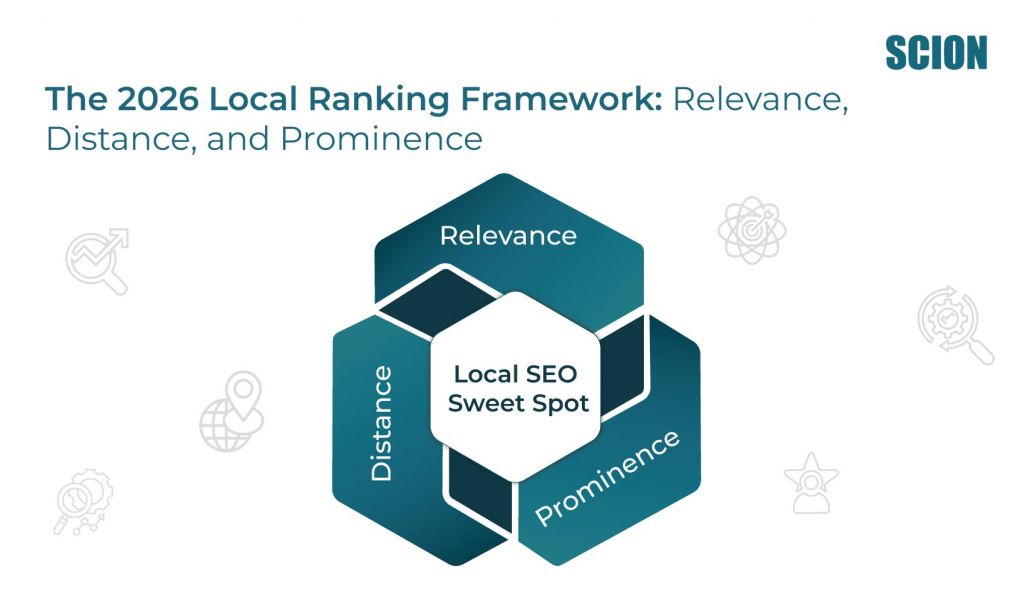
1. The 2026 Local Ranking Framework: Relevance, Distance, and Prominence
Before diving into tactics, it is vital to understand the Google Business Profile ranking factors that dictate visibility. Google’s algorithm weighs three core pillars:
- Relevance: How well your profile matches the searcher’s intent. This is driven by your chosen categories, attributes, and the depth of your service descriptions.
- Distance: The physical proximity of your business to the searcher or the specified location. While you can’t change your address, you can optimize your “Service Areas.”
- Prominence: How well-known your business is. This is fueled by your review velocity, backlink profile, and mentions across the web (local citations).
2. Setup, Claiming, and the Verification Hurdle
While the platform was formerly known as Google My Business, the transition to GBP has streamlined the setup process into three critical phases:
- Claiming & Ownership: Ensure your profile is registered with a corporate domain email. If you are a multi-location enterprise, use a “Location Group” to manage assets.
- The Verification Gauntlet: Verification is stricter than ever to prevent spam. Be prepared for video verification (showing your physical premises, tools, or business registration) or mail-in codes.
- Suspension Prevention: Avoid “keyword stuffing” your business name. If your legal name is “Smith & Co. Law,” do not change it to “Smith & Co. Best Divorce Lawyers New York.” This is the #1 cause of immediate profile suspension.
3. Core Profile Completion: The “NAP” and Beyond
Local SEO for Google Business Profile begins with a 100% completion rate. Incomplete profiles are deprioritized by AI models that prefer “high-confidence” data.
NAP Consistency (Name, Address, Phone)
Your NAP data must be identical across your website, GBP, and third-party directories. Even small discrepancies (e.g., “Street” vs “St.”) can dilute your local authority.
Categories & Attributes
Choose one Primary Category that most accurately reflects your core revenue driver. Use Secondary Categories for supporting services.
- Pro Tip: Use the “Attributes” section to highlight 2026 essentials like “Identifies as women-owned,” “Appointment required,” or “On-site services.”
Services and Products Taxonomy
Do not leave the services section to Google’s “auto-suggest.” Manually build out your service menu with keyword-rich descriptions. For B2B or retail, the Products feature is a hidden gem—it allows you to occupy more visual real estate on the search results page.
4. The Visual Content Strategy
Google’s Vision AI now “reads” your photos to understand what your business does.
- Quality over Quantity: You need a minimum of 20 high-resolution photos.
- What to Post: Team members in action, the interior/exterior of your office, and “behind the scenes” video content (30 seconds or less).
- Geotagging: Ensure your images contain metadata that confirms your location, further boosting “Distance” confidence.
5. Advanced Review Management: Velocity and Sentiment
Reviews are the lifeblood of Google Maps SEO. In 2026, Google’s AI summarizes review sentiment at the top of your profile.
- Review Velocity: It is better to get 5 reviews a month consistently than 50 reviews in one week followed by silence.
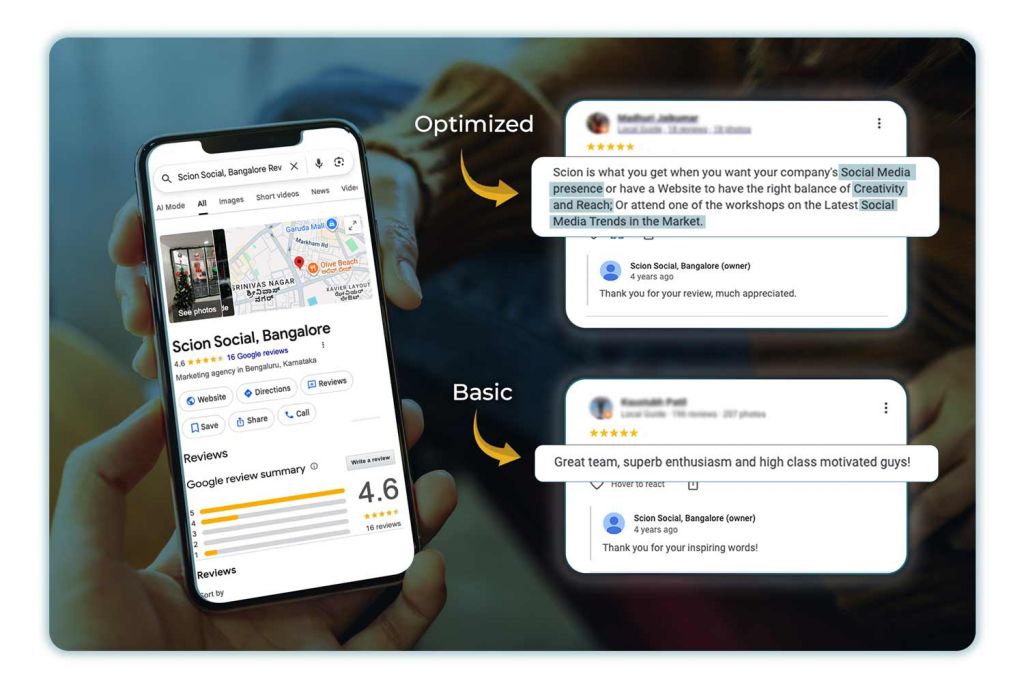
- Keyword-Rich Responses: When responding to a review, naturally include your service keywords.
- Example: “Thank you, Jane! We’re glad our commercial HVAC repair team could help you in Chicago.”
- The Negative Playbook: Respond within 24 hours. Acknowledge the issue, offer a specific offline resolution path, and remain professional. AI Overviews often highlight how a business resolves conflict.
6. Google Posts & Q&A Seeding
Think of Google Posts as a “mini-blog.” Post at least once a week.
- Offer Posts: Use these for seasonal promotions with a “Book Now” CTA.
- What’s New: Use these to share company news or recently completed projects.
Seeding Your Own Q&A
The Q&A section is community-driven, meaning anyone can answer questions about your business—often incorrectly. Take control: Populate your own Q&A by asking the most common questions your sales team receives and providing the “Owner-Verified” answer.

Social Media for BNI Markets. Sorted.
Everything you need to run your social media: ready-to-use content, tools, templates, and support. Delivered monthly.

7. AI Overviews (AEO) and the Local Pack
With the rise of Answer Engine Optimization (AEO), Google often pulls data directly from your GBP to answer complex queries like “Which boutique law firm in Austin has the best track record for tech startups?”
To be AI-ready:
- Use natural language in your descriptions.
- Ensure your website’s Local Schema Markup mirrors your GBP data perfectly.
- Keep your “From the Business” description updated with your latest accolades or specializations.
8. Measurement: Beyond the “Green Bars”
To truly understand how to optimize Google Business Profile performance, you must look at conversion attribution:
- UTM Tracking: Add a UTM code to your website link (e.g., ?utm_source=google&utm_medium=organic&utm_campaign=gbp) to see exactly how many leads in Google Analytics came from your profile.
- Discovery vs. Branded: Monitor whether people found you by searching your name (Branded) or your service (Discovery). A successful SEO strategy should see “Discovery” clicks increasing month-over-month.
Your Local Advantage
Optimizing your Google Business Profile is not a “set it and forget it” task. In the competitive landscape of 2026, it is a continuous cycle of data accuracy, customer engagement, and visual storytelling.
Ready to dominate your local market? Scion Social specializes in multi-location local SEO and AI-ready profile management. Let’s put your business on the map.
FAQs
Everything mentioned in this guide is free to execute within the GBP dashboard. The “cost” is simply the time required for consistent updates and review management.
Weekly. At a minimum, you should be responding to new reviews and publishing one new Google Post every 7 days.
Technically, yes, but it is significantly harder. A website provides the “Prominence” signals (backlinks and content) that Google uses to verify your business authority.