

In 2026, video marketing isn’t just effective – it dominates. According to Cisco, 82% of all internet traffic in 2025 was video content, making it the most powerful channel for engagement and conversion online.
That dominance isn’t accidental. Brands that lean into smart video marketing strategies are the ones capturing attention, building trust, and driving measurable business outcomes. From short-form video content that hooks audiences in seconds to deeper, education-focused clips that guide prospects through the funnel, video marketing for businesses has become a core growth engine, not just a nice-to-have.
This blog post digs into the future of video marketing, outlining the most impactful video marketing trends for 2026, why they matter, and how forward-thinking companies are already using them to outperform the competition.
What Has Changed in Video Marketing in 2026?
The digital landscape has shifted: audiences expect value in seconds. Platforms prioritize native experiences, and traditional broadcast-style commercials simply don’t move the needle like they used to.
Understanding these changes is the first step to building a video-first marketing strategy that scales in 2026.
What’s No Longer Working
Many traditional video marketing approaches struggle in 2026 because they prioritize production over relevance.
Common tactics that have lost effectiveness include:
- Over-polished, studio-style brand videos that feel disconnected from everyday content
- Long intros, logos, or brand reveals before delivering value
- Sales-led messaging too early in the customer journey
- One-size-fits-all videos reused across platforms instead of platform-native video content
- Feature-focused videos without a clear takeaway or outcome
- Single “hero” videos expected to perform across the entire funnel
These approaches often fail because they don’t align with current online video marketing trends or how audiences consume mobile-first video content.
What Is Working
The strongest video marketing trends in 2026 are built around clarity, intent, and trust. High-performing brands are creating videos that match viewer expectations and platform behaviour.
These include:
- Short, focused videos with one clear message
- Native editing styles designed specifically for each platform’s format and pacing
- Storytelling that resonates with viewers on an emotional level
- Authentic, human delivery
- Proof-driven messaging
- Video aligned to funnel stage
- Soft, value-based CTAs
Today, video marketing for businesses succeeds when it’s intentional, audience-aware, and aligned to a broader video marketing strategy – not when it tries to do everything at once.
2026 Video Marketing Trends That Drive Conversions
In 2026, conversion-focused video marketing relies on formats designed for attention, trust, and intent – meeting viewers where they are and guiding them naturally toward action.
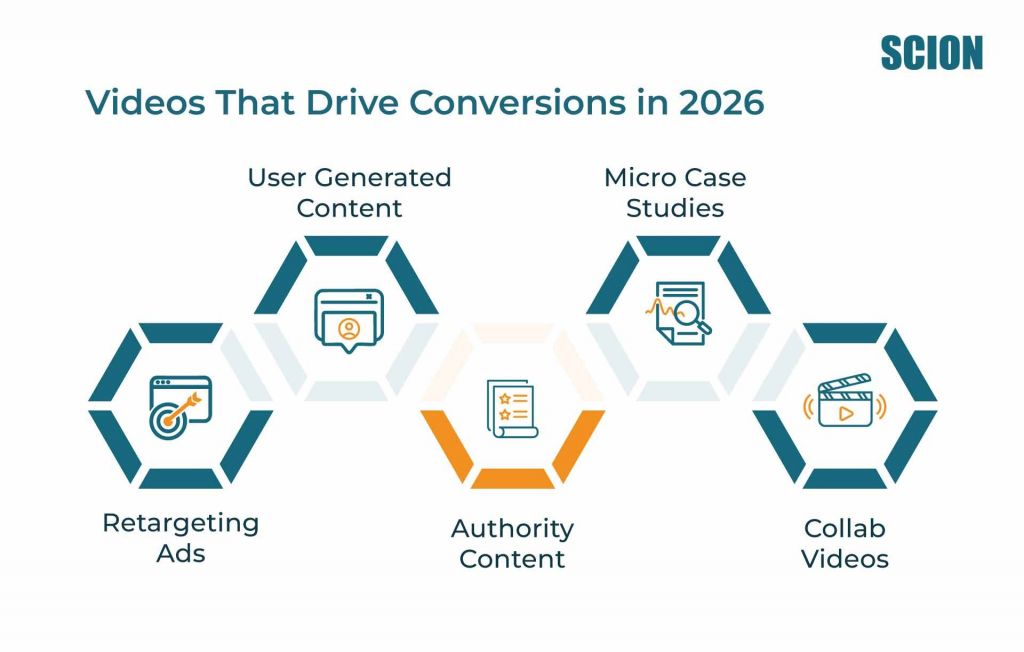
- UGC-style founder or expert videos consistently outperform for services and high-ticket offers, using direct-to-camera delivery to build trust and credibility.
- Problem-to-solution micro stories, typically 15-30 seconds, capture attention quickly by focusing on a single problem and one clear insight, making them ideal for short-form social media video marketing.
- Proof-first videos earn attention by leading with outcomes such as “We helped X achieve Y in Z days”, shifting the viewer’s focus from brand messaging to real-world impact and business value.
- Retargeting videos move viewers closer to conversion by addressing common questions, reducing uncertainty, and reinforcing clarity for those already familiar with the brand.
- Educational authority clips convert by positioning the brand as a guide, offering one useful concept and naturally inviting the viewer to explore how it applies to their own business or situation.
- Collaboration videos drive stronger engagement by leveraging shared audiences, allowing brands to extend reach while borrowing credibility through trusted voices and partnerships.
Video Conversion Frameworks for 2026
High-performing video marketing strategies in 2026 are built around clear frameworks that align attention, trust, and action. Rather than relying on creative instinct alone, smart teams use repeatable structures that map to how buyers actually consume and respond to video across platforms.
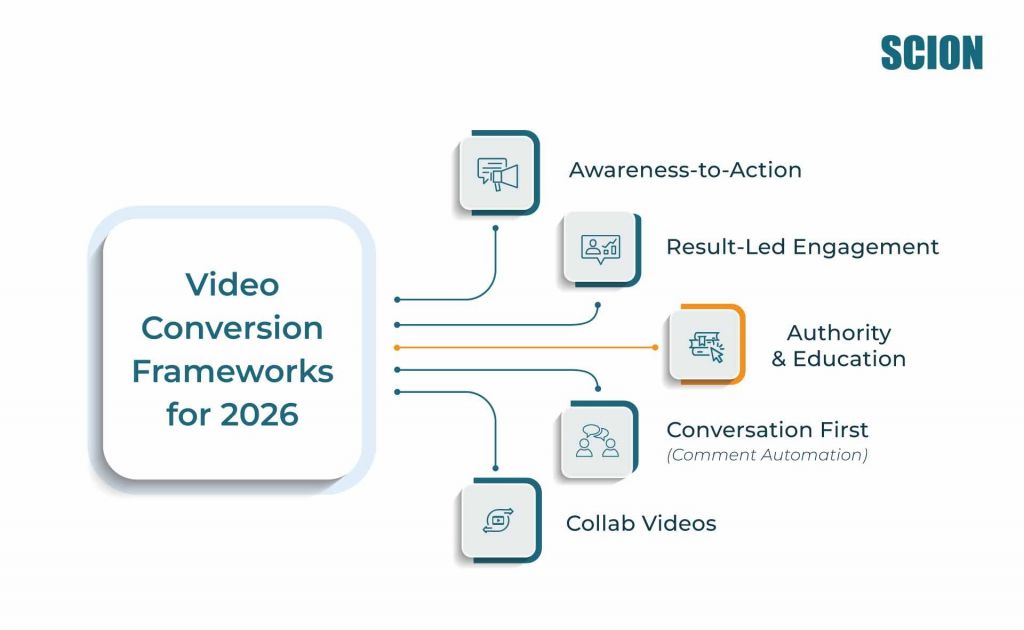
1. Awareness-to-Action Framework
Hook → Problem → Shift → Proof → Action
What it does: Creates relevance first, then nudges interaction such as comments or saves, helping warm audiences up before asking for a deeper commitment.
Brand example: HubSpot – Instagram & LinkedIn
HubSpot videos often open with a strong reframing hook like, “Most marketing teams are tracking the wrong metrics”. The video then challenges a common assumption, introduces a supporting stat or insight, and ends with a soft engagement prompt such as “Save this” or “Share with your team”.
Why it works: HubSpot consistently uses problem-first hooks and save-worthy insights to drive engagement without hard selling, making this framework highly effective for top-of-funnel and awareness-stage video marketing for businesses.

Ready to Turn LinkedIn Into a Growth Engine for Your BNI Market?
Stay visible, professional, and consistent with a done-for-you LinkedIn solution built specifically for BNI Leaders.

2. Result-Led Engagement Framework
Result → Why → How → Proof → Action
What it does: Leads with a clear outcome to earn attention immediately, positioning value before explanation.
Brand example: Shopify – YouTube Shorts & Instagram Reels
Shopify frequently opens with statements like, “This change helped brands sell more with less traffic”. The video then explains the shift, shows a quick example, and invites viewers to learn more.
Why it works: Shopify regularly leads with business outcomes rather than product features, aligning strongly with modern video marketing trends for 2026, where results-driven messaging earns trust and attention faster.
3. Authority & Education Framework
Mistake → Impact → Correction → Proof → Action
What it does: Positions the brand as a guide and educator, helping the audience learn rather than feel sold to.
Brand example: Google – Think with Google video snippets
Google often calls out common mistakes, such as, “Most brands still design video for sound-on”. The content then explains the impact, shares a data-backed correction, and encourages saving or sharing the insight.
Why it works: Google builds trust by teaching first and selling second, reinforcing authority while supporting long-term engagement and credibility.
4. Conversation-First (Comment Automation) Framework
Hook → Value → Comment Prompt → Reassurance → Follow-up
What it does: Designed specifically to trigger comments and automated replies, turning short-form video into a conversation engine.
Brand example: Canva – Instagram Reels
Canva frequently shares a quick design tip and ends with prompts like, “Comment ‘TEMPLATE’ and we’ll send it”.
Why it works: Canva uses comment triggers to start conversations and distribute resources at scale, making this framework highly effective for engagement-driven social media video marketing.
5. Story-to-Application Framework
Story → Lesson → Application → Proof → Action
What it does: Builds trust through relatability and real experience, helping audiences see themselves in the message.
Brand example: Nike – Founder/athlete short stories
Nike often shares a personal challenge, extracts a lesson, and connects it back to performance or mindset in a way that feels authentic and motivating.
Why it works: Nike consistently uses story-led clarity rather than product-led messaging, reinforcing emotional connection while supporting long-term brand trust and engagement.

Social Media for BNI Markets. Sorted.
Everything you need to run your social media: ready-to-use content, tools, templates, and support. Delivered monthly.

Creative Editing Styles That Are Winning in 2026
Audiences often make split-second decisions, which means that video marketing wins are defined by how the content feels, not how polished it looks.
The most effective video marketing trends in 2026 are driven by editing styles that feel native to the platform and effortless to consume, especially in mobile-first video content environments.
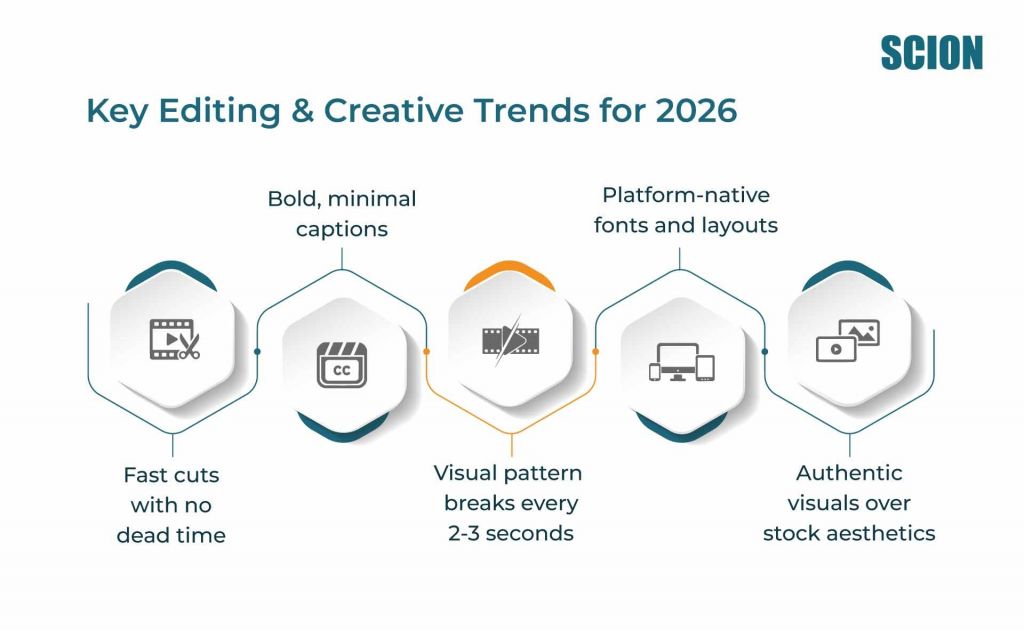
Key editing and creative trends include:
- Fast cuts with no dead time: Every second needs to earn attention. Tight pacing keeps viewers engaged and improves overall video engagement metrics.
- Bold, minimal captions: Captions are used to reinforce key ideas, not to transcribe every word. This supports accessibility while maintaining clarity across social media video marketing platforms.
- Visual pattern breaks every 2-3 seconds: Subtle changes in framing, text placement, or motion prevent attention drop-off and improve retention in short-form video content.
- Platform-native fonts and layouts: Using native styling helps videos blend naturally into feeds, increasing trust and reducing ad fatigue – a critical factor in platform-native video content.
- Authentic visuals over stock aesthetics: Videos that use stock footage tend to underperform. In 2026, credibility comes from realism, not cinematic effects, reinforcing the value of UGC video marketing.
The guiding principle is simple: if a video looks like an ad, audiences treat it like one.
Platform-Specific Quick Wins
In 2026, effective video marketing is platform-aware by default. Each platform rewards different behaviours, formats, and viewer expectations, which means performance depends on how well video is adapted to its environment, not how widely it’s reused.
Brands seeing consistent results design platform-native video content that aligns with how people watch, interact, and convert on each channel.
Meta & Instagram
On Meta platforms, short-form video remains one of the strongest drivers of discovery and engagement within social media video marketing. Success here comes from speed, clarity, and visual momentum.
What works best:
- 6-20 second videos for cold audiences
- Clear visual movement paired with captions
- A visible human presence (face-led or UGC-style)
- Vertical framing designed for mobile-first video content
These formats align closely with current online video marketing trends, especially when videos open with a problem or insight that immediately feels relevant to the viewer.
Best use cases:
- Awareness-stage content
- Educational hooks and micro-insights
- Soft CTAs that encourage saves or comments
YouTube & Shorts
YouTube continues to reward both short-form discovery and longer-form depth. In 2026, the strongest video marketing strategy on YouTube connects Shorts to deeper content rather than treating them as standalone posts.
What works best:
- Open with a result, tension point, or contrarian insight
- Hooks that challenge assumptions (“Skip this if you want average results”)
- Clear pacing with intentional pauses for emphasis
This approach supports stronger retention and aligns with evolving video content marketing trends, where short-form content feeds longer engagement paths.
Best use cases:
- Authority building
- Education-led discovery
- Bridging short-form attention to long-form value
Retargeting Videos
Retargeting is where video marketing for businesses often delivers its strongest ROI, because audiences that already understand the brand are closer to taking action.
What works best:
- 30-60 second videos with calm, confident delivery
- A clear explanation of: process (what working with you actually looks like), proof (evidence it works), and reassurance (removing uncertainty so buyers feel confident moving forward)
- Proof-driven messaging to support video ad conversion rates
Best use cases:
- Addressing common buyer questions
- Decision-stage reassurance
- Reinforcing value & fit
Video Marketing CTA Trends for 2026
In 2026, the role of the CTA in video marketing has evolved. Instead of pushing immediate decisions, high-performing brands use CTAs to reduce friction, guide intent, and keep the viewer moving forward. The most effective CTAs feel like a natural next step, not a salesy interruption.
This shift reflects broader video marketing trends where trust and clarity outperform urgency and pressure.
Which CTAs No Longer Convert?
Direct, sales-heavy CTAs still have a place at the bottom of the funnel, but when used too early, they often stall engagement and reduce video ad conversion rates.
CTAs that underperform in most stages include:
- “Book a call now”
- “Buy today”
- “Sign up”
These approaches assume high intent before it’s been earned, especially in short-form video content environments.
What Works Now
Modern video marketing for businesses uses CTAs that align with viewer intent and funnel stage. Instead of forcing a decision, these CTAs invite exploration, learning, or application.
High-performing CTA styles in 2026 include:
- “See how this works” (encourages curiosity without pressure)
- “Get the framework” (reinforces value and education)
- “Apply this to your business” (positions the brand as a guide)
- “Watch the full strategy” (supports deeper engagement and video retargeting strategies)
These CTAs are especially effective across social media video marketing, where viewers are more likely to engage with content that feels helpful rather than transactional.
How Smart Brands Use CTAs Across the Funnel
The most successful video marketing strategies treat CTAs as directional tools, not closing statements:
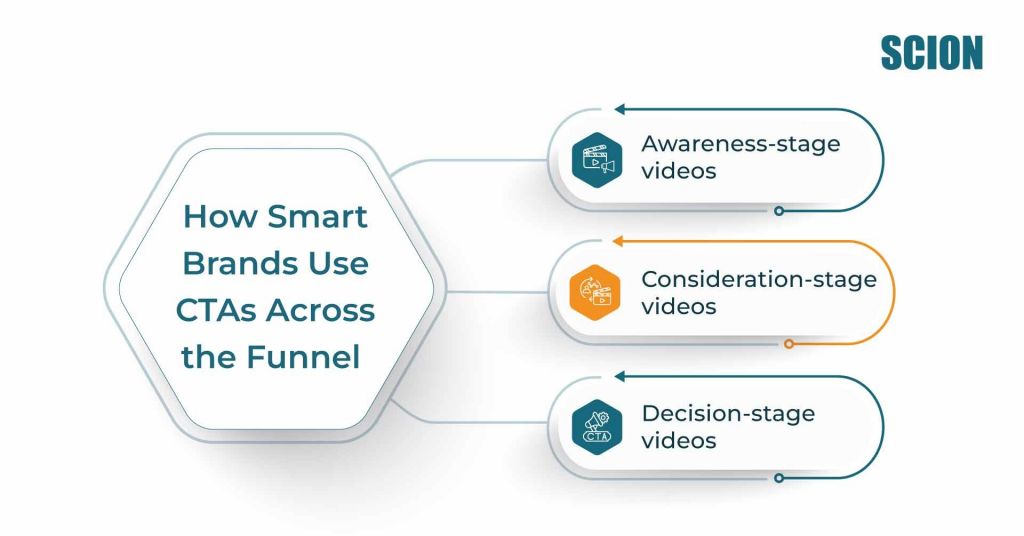
- Awareness-stage videos: CTAs encourage saves, follows, or comments to build signal and intent.
- Consideration-stage videos: CTAs invite viewers to explore deeper content or learn how the approach works.
- Decision-stage videos: CTAs focus on reassurance, clarity, and next steps.
By aligning CTAs with intent, brands create a smoother path from attention to action, reinforcing why thoughtful CTAs are now a defining video marketing trend in 2026.
Conclusion
In 2026, video marketing isn’t just keeping pace with digital change – it’s leading it. As audiences demand faster value, clearer messaging, and more relevant experiences, the brands that win are those treating video as a system, not a one-off tactic.
The most effective video marketing trends today are built on intention: clarity in the message, context in delivery, and action that feels natural, not forced. When video aligns with how people actually consume content across platforms, it becomes one of the most powerful drivers of attention, trust, and conversion.
Whether you’re refining your social media video marketing, experimenting with short-form video content, or building a full-funnel strategy, the opportunity in 2026 is clear: video works best when it’s designed to guide, not interrupt.
If you want to stay ahead of emerging video marketing trends and learn how to apply them strategically, subscribing to the Scion Newsletter is an easy next step – practical insights, no noise, and ideas you can actually use.
FAQ’s
The most effective video marketing strategy in 2026 is a full-funnel approach that aligns video format, message, and CTA with viewer intent. Instead of relying on a single type of video, high-performing brands use short-form content to capture attention, educational videos to build trust, and conversion-focused videos to guide action. This structure allows video marketing for businesses to scale results while meeting audiences where they are across platforms.
Short-form video marketing dominates in 2026 because audiences expect immediate value and platforms prioritize content that drives fast engagement. Vertical, mobile-native videos are easier to consume, more shareable, and better suited to social algorithms. When used strategically, short-form video acts as the entry point to deeper video marketing strategies, feeding awareness and retargeting efforts without overwhelming the viewer.
Social media video marketing drives conversions by combining reach, relevance, and repetition. Platform-native videos allow brands to speak directly to specific audience needs while building familiarity over time. When paired with clear messaging and intent-based CTAs, social video becomes a powerful tool for moving viewers from awareness to consideration and, ultimately, action – a key video marketing trend in 2026.
AI supports modern video marketing trends by helping brands optimize content faster and more efficiently. From generating captions and editing short clips to analyzing performance and audience behavior, AI tools allow marketers to refine their strategy without sacrificing quality. In 2026, AI isn’t replacing creativity – it’s enhancing how video marketing teams test, personalize, and scale their content.
Success in video marketing is measured by more than views alone. Key performance indicators now include watch time, engagement, saves, click-through rates, and assisted conversions. By tying metrics back to funnel stages, brands can better understand how video influences decision-making and continuously improve their video marketing strategy based on real behavior.
Authentic, short-form, and problem-and-solution-focused videos perform best in 2026, particularly those led by founders or experts and supported by proof. These formats align closely with current video marketing trends in 2026, as audiences prioritize relevance, clarity, and real-world outcomes over polished brand messaging.
For cold audiences, videos between 6 and 30 seconds perform best, while retargeting and consideration-stage videos can extend to 60 seconds. The most effective video marketing strategy adjusts length based on funnel stage, platform behavior, and viewer intent rather than relying on a one-size-fits-all format.
Authenticity builds trust and credibility, especially in social media video marketing, where audiences expect content to feel native and human. Brands that prioritize authentic delivery consistently see stronger engagement, retention, and video ad conversion rates compared to highly produced, sales-led videos.
Staying ahead requires ongoing testing, platform awareness, and continuous learning, including tracking performance data and adapting creative strategies as audience behavior evolves.